


Ring Chromosome 22
by Carla D’Imperio, PMSF Director of Family Support and Lauren Schmitt, PhD, PMSF Chief Science Officer
What Is Ring Chromosome 22?
The majority of individuals with Phelan-McDermid syndrome who have a deletion have a terminal deletion, or a deletion involving the end of chromosome 22. In rarer cases, the ends of that chromosome join together to form a circle called ring chromosome 22 or ring 22. It is estimated that approximately 10% of individuals with Phelan-McDermid syndrome have ring 22 (Levy et al., 2021; Yin et al., 2024).
If your loved one has Phelan-McDermid syndrome caused by a terminal deletion, it is important to know whether they also have ring 22 because it may require additional medical monitoring.
A karyotype (or FISH testing) is needed to identify a ring chromosome. Although chromosomal microarray, whole exome sequence, or whole genome sequence can identify the deletion that causes Phelan-McDermid syndrome, karyotyping is required to determine whether chromosome 22 has formed a ring.
If your loved one has a terminal 22q13 deletion and has not had a karyotype, talk with your geneticist or healthcare provider about testing for ring chromosome 22.
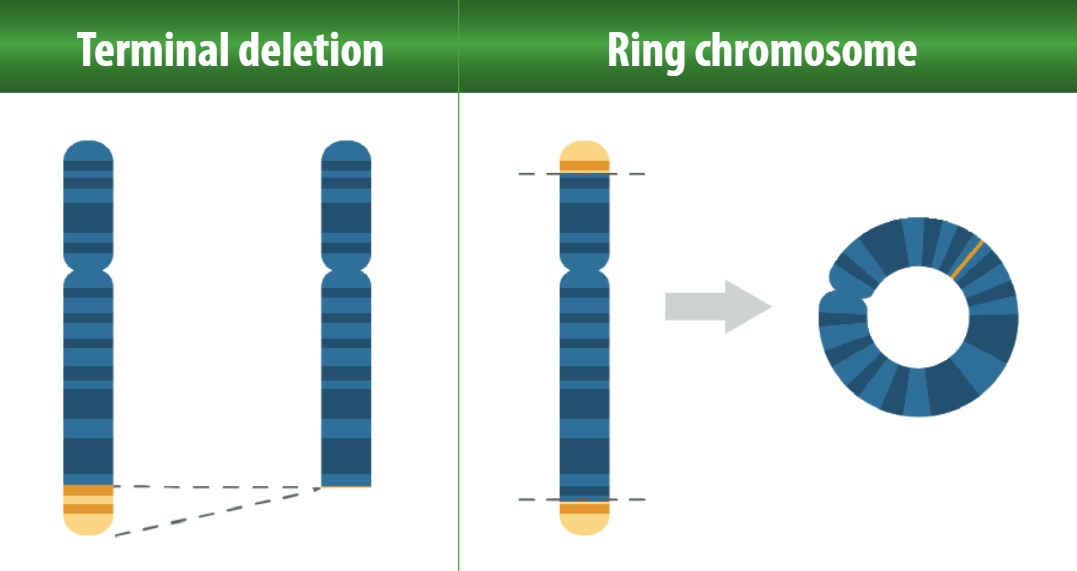
Why Does Ring 22 Matter?
Ring 22 can have medical considerations beyond those typically associated with Phelan-McDermid syndrome.
One important consideration involves the NF2 gene, which is located on chromosome 22. People with ring 22 may have an increased risk of developing certain tumors associated with loss of function of the NF2 gene, including those that affect the nerves, brain, or spinal cord. These tumors are associated with a condition neurofibromatosis type 2 (NF2) or NF2-related schwannomatosis.
Identifying ring 22 allows families and healthcare providers to plan appropriate monitoring and identify potential concerns as early as possible. Families should discuss the recommended monitoring for ring 22 with their medical team.
Ring 22 Medical Guidelines
PMSF provides medical guidance specifically for individuals with ring chromosome 22. These recommendations can help families and healthcare providers understand the additional monitoring that may be appropriate.
We encourage families to share these guidelines with their geneticist, neurologist, primary care provider, and other members of their medical team.
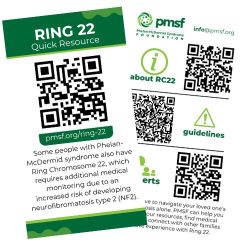
Ring 22 QR Card
PMSF has created a Ring 22 QR Card that provides quick access to important ring 22 information, support, and resources.
Save or print the card and share it with your loved one’s healthcare providers so they are aware of the additional considerations associated with ring chromosome 22.
Find a Clinic or Specialist
Families with ring 22 may benefit from care that includes expertise in both Phelan-McDermid syndrome and NF2-related conditions.
PMSF’s Clinics page includes Phelan-McDermid syndrome clinics and specialists who can help families access appropriate care. An NF2 expert available to families affected by ring 22 is also listed on this page.
Additional Resources
Phelan-McDermid Syndrome Clinical Consensus Guidelines
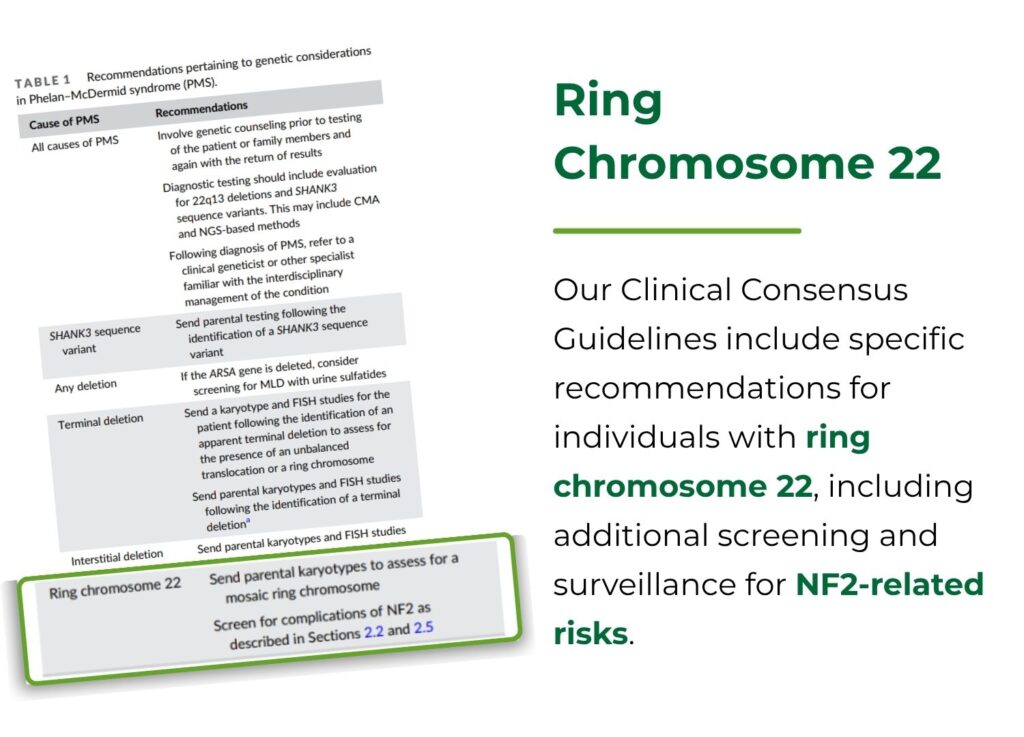
The PMS Clinical Consensus Guidelines provide recommendations for the evaluation and management of individuals with Phelan-McDermid syndrome, including information relevant to ring chromosome 22.
All of the recommendations tables in the Clinical Consensus Guidelines will include additional recommendations for Ring 22 at the bottom of the table. Please see the example to the right.
Please note that for some of the tables, recommendations pertaining to ring 22 are in addition to those pertaining to any cause of Phelan-McDermid syndrome.
Consensus Recommendations on Counseling and Ring Chromosome 22
This publication provides recommendations for genetic counseling in Phelan-McDermid syndrome, with specific attention to ring chromosome 22 and recurrence risk.
NF2 In Phelan-McDermid Syndrome
This publication describes NF2-related findings in individuals with Phelan-McDermid syndrome and ring chromosome 22 and reviews the available medical literature.
Support For Families
If you learn that your loved one has ring 22, you do not have to navigate the additional information alone. PMSF can help you understand available resources, find appropriate medical expertise, and connect with other families who have experience with ring chromosome 22.
Join PMSF
Connect with Family Support
An important first step for any family with a loved one with Phelan-McDermid syndrome is to join PMSF membership. Membership is free and connects families with education, support, research opportunities, events, and updates from the Phelan-McDermid syndrome community.
Have questions about ring 22, finding a specialist, understanding available resources, or connecting with another ring 22 family? The PMSF Family Support team is here to help.