

Earlier this spring, Dr. Lauren traveled to the Gatlinburg Conference in San Diego, CA, and the International Society for Autism Research (INSAR) Conference in Seattle, WA, to get the latest research updates in Phelan-McDermid syndrome and broader neurodevelopmental disorders.
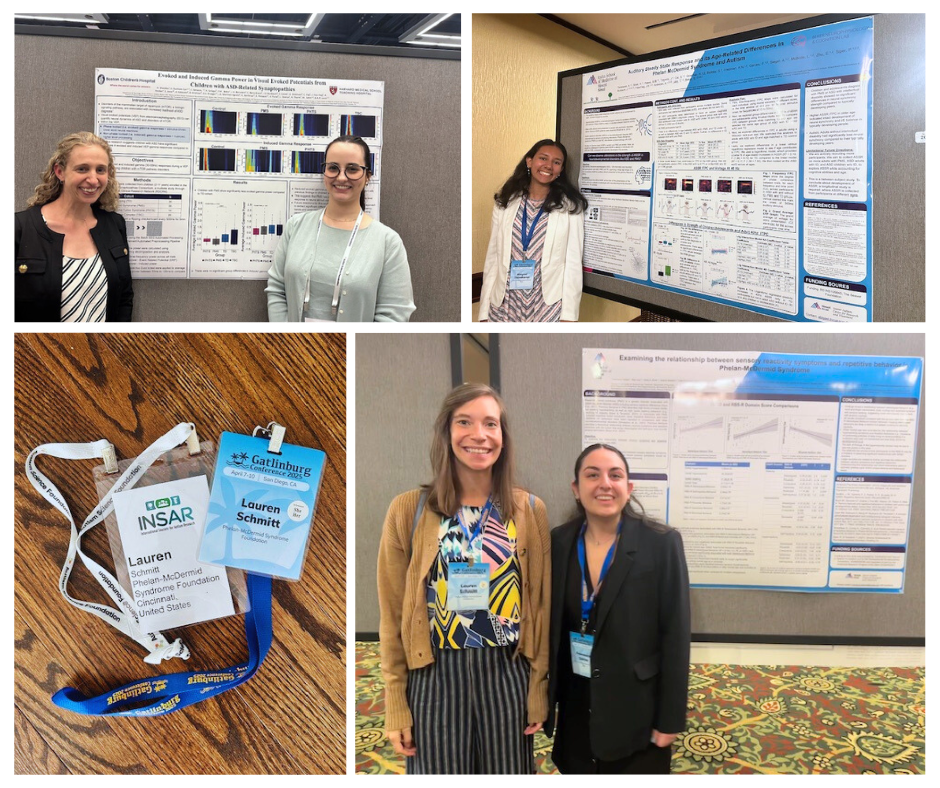
Conferences come in all different shapes and sizes! For example, the Gatlinburg Conference (which used to be located exclusively in Gatlinburg, TN hence the name) is one of Dr. Lauren’s favorites as it is fairly small (under 400 attendees) and focused on clinical research in intellectual and developmental disabilities, and typically contains lots of research on rare genetic conditions like Phelan-McDermid syndrome. On the other hand, INSAR is a much larger conference (over 2,000 attendees) and more focused specifically on autism across the entire spectrum. Topics cover everything from basic lab science to translational studies to human research. Conferences provide a valuable opportunity for Dr. Lauren to have in-person conversations with scientists conducting research in Phelan-McDermid syndrome and industry partners, as well as make new connections with researchers and industry partners whose work could benefit our community!
Highlights and Takeaways
A Wealth of Data from The Natural History Study (NHS)
It was so exciting to see new research findings from the Phelan-McDermid Syndrome Natural History Study that so many of your loved ones have participated in! Importantly, all the posters were presented by early career researchers (some even before they are in graduate school!). Conferences are a great way for early career researchers to show off their work and talk to experts in the field! Plus, this is a great opportunity for the Phelan-McDermid syndrome community to get to know the next generation of researchers out there!
Phelan-McDermid syndrome posters:
- Examining the Relationship Between Sensory Reactivity Symptoms and Repetitive Behavior in Phelan-McDermid syndrome (Gatlinburg Conference – Presenter Francesca Garces from Mt. Sinai)
- Individuals who are sensory seeking, based on caregiver-report and behavioral observation, tend to engage more in stereotyped behaviors like hand and finger mannerisms or body rocking. This suggests repetitive body movements likely serve a positive role in fulfilling sensory needs.
- Auditory Steady State Response in Patients with Phelan-McDermid Syndrome and Idiopathic Autism (Gatlinburg Conference – Presenter Abigael Thinakaran from Dr. Alex Kolevzon’s Lab at Mt. Sinai)
- While wearing a cap of electrodes, participants listened to sound at a specific frequency to determine how well their brain rhythms “tuned in” to or synchronized with the frequency of the sound. Findings suggest children and adolescents with Phelan-McDermid syndrome “tuned in” just as well as typically-developing controls, but adults had more difficulty. Since the ability for the brain to synchronize with sounds is known to increase with age, it is possible that differences are too small to detect in youth. But it is also possible that the ability of brain cells to talk to each other based on external stimuli may be relatively intact in youth with Phelan-McDermid syndrome!
- Evoked and Induced Gamma Power in Visual Evoked Potentials from Children with ASD-Related Synaptopathies (INSAR Conference – Presented by April Levin’s Lab at Boston Children’s Hospital)
- Children with Phelan-McDermid syndrome showed less high frequency (gamma) power tied to the onset of a visual stimulus compared to typically-developing children, suggesting differences in initial processing of sensory stimuli. It is not yet known whether this difference is related to clinical symptoms.
Outcome Measures in Rare Genetic Conditions are Insufficient
Most caregivers would likely agree that current tests to measure cognition and executive functioning, like processing speed, keeping information active in the brain (working memory), the ability to stop a response (inhibition), or change a response (cognitive flexibility), are not accurately capturing skills in individuals with Phelan-McDermid syndrome. Most tests rely heavily on verbal instructions and manipulation of objects. Thus, delays and difficulties in language processing and hypotonia make completing tasks difficult and likely under-estimate abilities.
At Gatliburg, several groups presented their work using adapted tests that are more developmentally appropriate and minimize language and motor demands for patient populations like Phelan-McDermid syndrome. Although groups have specifically tried tasks in individuals with Phelan-McDermid syndrome yet, Dr. Lauren has planted the seed in the researchers’ minds and will be following up soon!
Larger panel discussions at both conferences also focused on the critical need for improved measures as endpoints in clinical trials. These panels prompted lively discussions from the audience and highlighted the need for meaningful endpoints–endpoints that could be quantified, sensitive to change, AND captured clinical symptoms relevant to the family. Examples from Inchstone and Dup15q syndrome were noted.
With Dr. Lauren’s background in clinical psychology, she has previous experience in the development and validation of measures used in clinical trials, and is committed to bringing this expertise to the Phelan-McDermid syndrome community.
Hope at a Time of Uncertainty
As Dr. Lauren has highlighted in previous blog posts here and here, the landscape of biomedical research funding from the federal government is uncertain. In talking with researchers from across the nation, some labs focused on neurodevelopmental disorders have lost their funding, and other labs anxiously await hearing whether new grants are funded due to extended delays in the review process. Yet, both conferences were filled with highly committed researchers who have no plans of stopping now. They are invigorated to keep the science moving forward and being creative in their source of funding.
For Dr. Lauren, it was an important reminder of how essential patient advocacy organizations, like the Phelan-McDermid Syndrome Foundation, are in the scientific process. For example, PMSF helps researchers better understand the lived experience of individuals and their families to shape research questions and projects. This means Dr. Lauren works with researchers both during the grant preparation stage as well as the project start-up phase to ensure that research projects are not only meaningful and feasible for families but also use the best measures available. In addition, PMSF supports both established and early career investigators by offering research grants to fund new research projects. As federal funding becomes more uncertain, researchers are more likely to seek additional funding through patient advocacy organizations like PMSF. Check out the studies PMSF has funded!
Honorable Mentions
- The mouse model of Angelman syndrome demonstrates GI motility issues, which have been previously reported in the SHANK3 mouse model. Thus, future studies that identify potential treatments that rescue motility issues like constipation in the Angelman mouse model may also be useful in our community! (From Gatlinburg Conference – Taeseon Woo from New York University in Kara Margolis’ lab)
- Dr. Lee Wachtel presented findings on the positive outcomes of using electroconvulsive therapy (ECT) for individuals with intellectual disability with co-occurring catatonia. Don’t forget to catch the webinar series on catatonia!
- Brian Eisinger presented findings from BioLogic Pharma Solutions, highlighting under-diagnosis in Phelan-McDermid syndrome, which Dr. Lauren recently wrote about it in a blog post!
One More Thing!
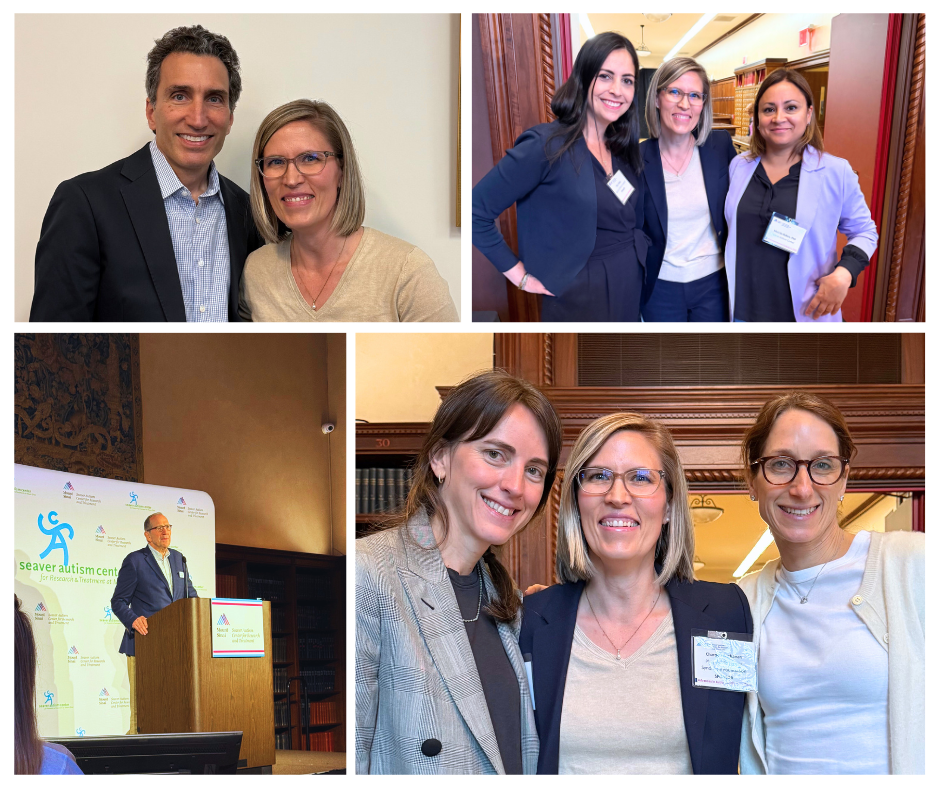
PMSF Board Member, Chardell Buchanan, had the opportunity to attend both the Advances in Autism Conference 2025: Precision Therapeutics in Profound Autism at the Seaver Autism Center at Mt. Sinai, as well as the 12th Annual Day of Learning sponsored by the Autism Science Foundation in New York City.
She shared her thoughts:
“The work that is being done in the area of profound autism and its treatment is incredibly exciting!
I especially enjoyed hearing about the treatments for PMS: the ones they tried in the past, the ones they are currently using, and what’s on the horizon for treatment.
The researchers and clinicians truly care about making a difference. I believe they WILL make a difference for our children and positively impact the way we care for them.”
You can catch the Advances in Autism Conference 2025 on YouTube!