
Nutrition Guidelines
Food isn’t just fuel—it’s nourishment, connection, and care. For individuals with Phelan-McDermid syndrome, the right nutrition can make a meaningful difference in energy,…


Food isn’t just fuel—it’s nourishment, connection, and care. For individuals with Phelan-McDermid syndrome, the right nutrition can make a meaningful difference in energy,…

A new FAQ from Jaguar Gene Therapy is now available, including updated details about the JAG201 clinical study. This FAQ addresses…
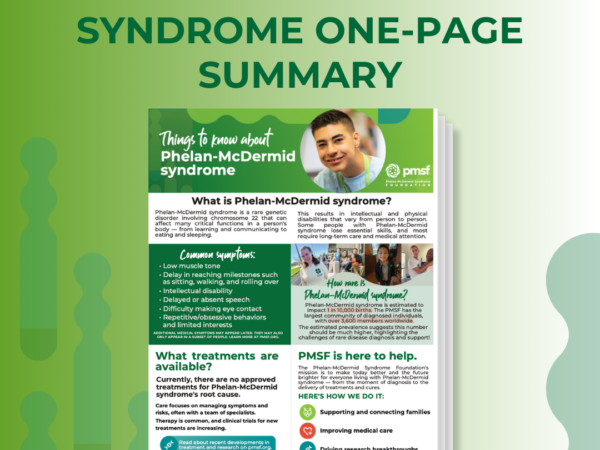
This one-page information sheet provides a brief overview of Phelan-McDermid syndrome, including its genetics, symptoms, treatments, and how the Phelan-McDermid Syndrome…
Phelan-McDermid syndrome is characterized by global developmental delay, intellectual disability, speech impairment, autism spectrum disorder, and hypotonia; other variable features include epilepsy, brain and renal malformations, and mild dysmorphic features. Here, we conducted genotype-phenotype correlation analyses using the PMS International Registry, a family-driven registry that compiles clinical data in the form of family-reported outcomes and family-sourced genetic test results.

The primary purpose of the study is to evaluate the effect of lithium at 12 weeks (capsules dosed at 62.5mg, 125mg,…

The purpose of the study is to look at the safety, tolerability, and efficacy of NNZ-2591 in the treatment of children…
The objective of these updated clinical management guidelines was to: (1) reflect the latest in knowledge in PMS and (2) provide…
Early onset sleep problems and disorders are very common in individuals with Phelan-McDermid Syndrome (PMS) with rates of up to 90%. These sleep problems and disorders cannot be taken lightly. Not only do they have a major impact on the health, behaviour, functioning and learning opportunities of affected individuals, they can also have detrimental effects on the well-being and resilience of parents and caregivers, ultimately affecting the physical health, mental health and well-being of the whole social system.
The manifestations of Phelan-McDermid syndrome (PMS) are complex, warranting expert and multidisciplinary care in all life stages. In the present paper we propose consensus recommendations on the organization of care for individuals with PMS.
Phelan-McDermid syndrome is a rare genetic condition caused by a deletion encompassing the 22q13.3 region ora pathogenic variant of the gene SHANK3. The clinical presentation is variable, but main characteristics includeglobal developmental delay/intellectual disability (ID), marked speech impairment or delay, along with otherfeatures like hypotonia and somatic or psychiatric comorbidities.