



2025 PMSF Neuropsychiatric Illness Award RFA
This document outlines the Request for Applications (RFA) for the 2025 PMSF Shannon O’Boyle Memorial Grant, a $100,000 funding opportunity to…

Jaguar Gene Therapy Community Letter & FAQ *UPDATED 2/23/26*
A new FAQ from Jaguar Gene Therapy is now available, including updated details about the JAG201 clinical study. This FAQ addresses…
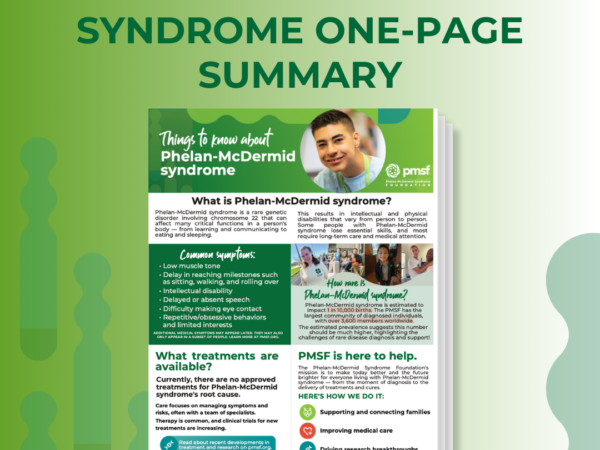
About Phelan-McDermid Syndrome – One Page Summary
This one-page information sheet provides a brief overview of Phelan-McDermid syndrome, including its genetics, symptoms, treatments, and how the Phelan-McDermid Syndrome…
Testes Genéticos de Seguimento na Síndrome de Phelan-McDermid (PMS) – Portuguese
Testes Genéticos de Seguimento na Síndrome de Phelan-McDermid (PMS)
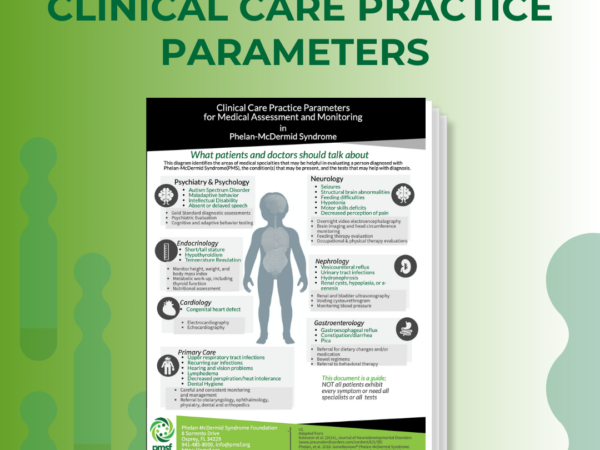
Parâmetros de Prática Clínica para avaliação e monitorização médica na Síndrome de Phelan-McDermid – Portuguese
Este diagrama identifica as áreas de especialidades médicas que podem ser úteis na avaliação de uma pessoa diagnosticada com a Síndrome de Phelan-McDermid (PMS), as condições que podem estar presentes, os exames que podem ajudar no diagnóstico e a abordagem multidisciplinar.
How a Genetic Counselor Can Help You
A Global Genes resource: Since most rare diseases are caused by changes in your genes, genetic testing is often part of the journey. But understanding your options may be challenging. Partnering with a genetic counselor can help you make the best choice for you and your family. What is a Genetic Counselor? A genetic counselor is a healthcare professional with special training in counseling and medical genetics. They can help you understand the diagnostic process and can advocate for you to obtain emotional and financial support and get the best possible care.
Phenome‑wide profiling identifies genotype‑phenotype associations in Phelan‑McDermid syndrome
Phelan-McDermid syndrome is characterized by global developmental delay, intellectual disability, speech impairment, autism spectrum disorder, and hypotonia; other variable features include epilepsy, brain and renal malformations, and mild dysmorphic features. Here, we conducted genotype-phenotype correlation analyses using the PMS International Registry, a family-driven registry that compiles clinical data in the form of family-reported outcomes and family-sourced genetic test results.
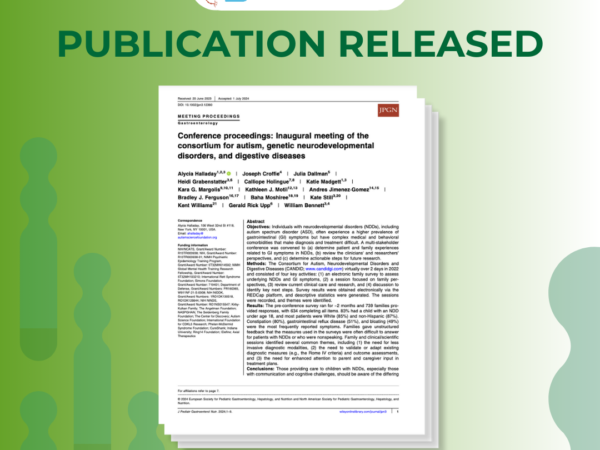
Publication: CANDID Conference Proceedings
The Inaugural Meeting of the Consortium for Autism, Genetic Neurodevelopmental Disorders, and Digestive Diseases (CANDID) was held in 2022 to gain…