

Why Nutrition Matters in Phelan-McDermid Syndrome
By: Meagan Hutchinson, Science & Research Administrator, Phelan-McDermid Syndrome Foundation
December 18, 2025
Nutrition plays a critical role in supporting overall health in individuals with Phelan-McDermid syndrome. A recent study from Spain evaluating gastrointestinal (GI) challenges in individuals with Phelan-McDermid syndrome found that more than 75% of participants experienced digestive symptoms. Nutritional assessments in this study also revealed reduced calorie intake and low dietary fiber, calcium, iron, and vitamins D and E, along with increased intake of simple sugars, protein, saturated fat, and cholesterol. Together, these findings demonstrate a need for improved nutritional support for individuals with Phelan-McDermid syndrome.
In response to this need, the Phelan-McDermid Syndrome Foundation recently launched the Nutrition Guidelines for Phelan-McDermid Syndrome. This guide was created by Chardell Buchanan, MA, RDN with consultation from Cara Dubinsky, MS, RDN, CDN. This guide has been reviewed and approved by the Phelan-McDermid Syndrome Foundation Medical Advisory Committee (MAC). While the guidelines provide practical recommendations on diet, vitamins, supplements, and the management of common GI symptoms, families are encouraged to consult their child’s healthcare team before making any changes to diet or supplementation.
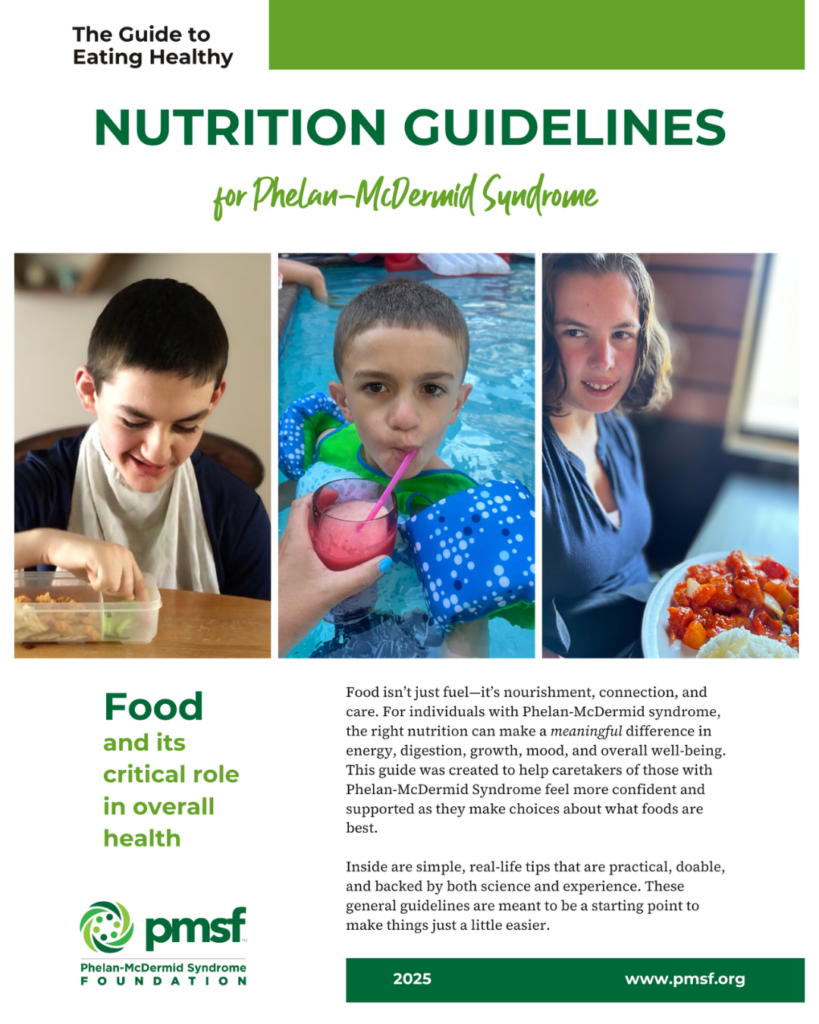
The guidelines address diet, vitamins and supplements, and common GI symptoms in Phelan-McDermid syndrome, such as chewing and swallowing difficulties, constipation, and gastroesophageal reflux (GERD) as well. Here are some of the key takeaways:
- Diet: Aim for a balanced diet with a variety of foods and maintain hydration
- Vitamins and supplements: Ensure adequate fat-soluble vitamins (A, D, E, and K), zinc, iron, and vitamin C
- Chewing and swallowing challenges: Offer foods in small, safe portions, modify textures, and encourage a slower eating pace
- Constipation: Prioritize hydration, gradually increase fiber intake, and implement physical activity
- Reflux: Offer smaller, more frequent meals and remain upright after eating
Effectively addressing nutritional and GI challenges often requires a collaborative, multidisciplinary approach. Support from a registered dietitian nutritionist, speech-language pathologist, occupational therapist, physical therapist, and pediatrician or neurologist can help ensure comprehensive care. Together, these professionals address nutrition, feeding skills, sensory sensitivities or preferences, movement, and overall health for individuals with Phelan-McDermid syndrome.
Resources:
- Research Article (Carrera-Juliá et al., 2025): https://www.frontiersin.org/journals/nutrition/articles/10.3389/fnut.2025.1668101/full
- Nutrition Guidelines: https://pmsf.org/document/nutrition-guidelines/
- Pathways Education Series: Nutrition and Phelan-McDermid Syndrome: https://youtu.be/RoGehO5DLKQ?si=qS9x9Jg7LakIWCQn