
Updates on the PMS Natural History Study
By: Lauren Schmitt, PhD, Chief Science Officer, Phelan-McDermid Syndrome Foundation
December 11, 2025
What is the Natural History Study?
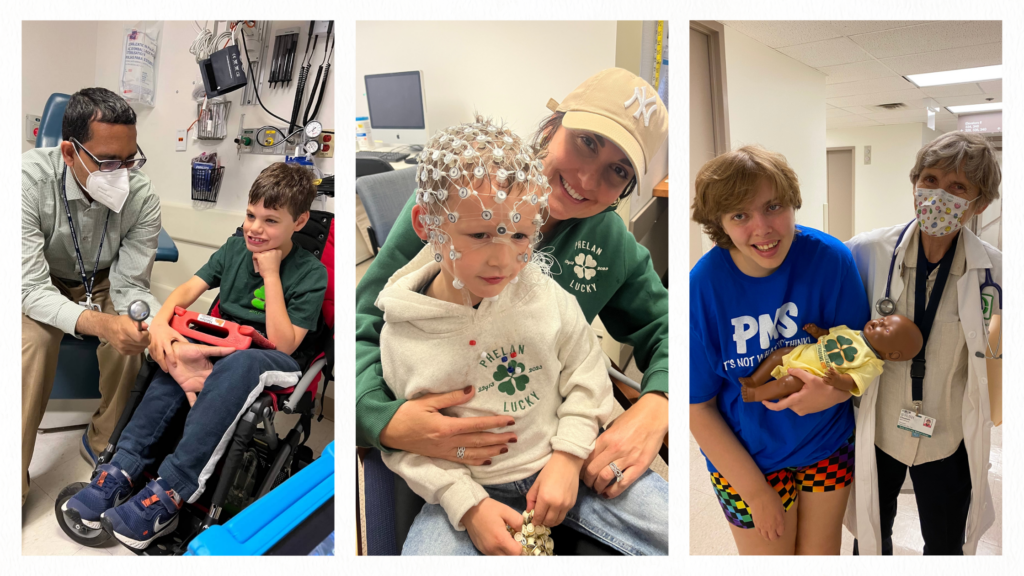
The Natural History Study (NHS) is part of the Developmental Synaptopathy Consortium (DSC), which is funded by the National Institutes of Health (NIH) to better understand Phelan-McDermid syndrome and other developmental synaptopathies. The DSC has been funded for two cycles (10 years!), with one of the primary objectives being to help providers, researchers, and the community learn about strengths, challenges, and development across an individual’s lifetime.
BIG NEWS!
In late October, it was officially announced that the DSC has been funded for a third cycle!! Stay tuned to hear more about the third cycle and when recruitment will begin!
Epilepsy & Seizure Updates
Dr. Siddharth Srivastava (“Dr. Sid”) from Boston Children’s Hospital recently shared a brief video highlighting the latest findings on epilepsy and seizures in Phelan-McDermid syndrome.
Also, you can check out our previous blog post here!
Behavior & Cognition Updates
The following serves as a companion piece to our podcast with Drs. Audrey Thurm and Latha Vallurpipalli Soorya! Missed it? Listen here!
The September issue of American Journal on Intellectual and Developmental Disabilities spotlighted the DSC with four articles on Phelan-McDermid syndrome from the first cycle. Although the articles are not Open Access (i.e., cannot be accessed without paying), our podcast and blog highlight the primary findings!
Why This Study Matters:
- It collects consistent data across many children and teens with Phelan-McDermid syndrome using the same tests and tools.
- It tells researchers what behaviors, skills, and symptoms are common—and how they change over time.
- It helps researchers figure out what tests and tools actually work for kids with PMS—and which ones don’t.
- It provides vital information for clinical trials, so we can test treatments safely and effectively.
- It also informs everyday clinical care, like therapy planning and choosing educational goals.
What Have We Learned?
- PMS is unique. For example, individuals with PMS are more likely to have intellectual disability and intellectual disability tends to be more severe compared to other genetic conditions studied in the DSC, like PTEN hamartoma tumor syndrome and compared to other genetic PTEN and tuberous sclerosis complex (TSC).
- Some tests don’t work well for kids with PMS, especially if they weren’t designed for individuals with intellectual disabilities.
- Caregiver reports—like the Vineland Adaptive Behavior Scale—are often the most accurate tools for tracking progress.
- Children with PMS can and do gain skills over time, especially in understanding language and daily living (like getting dressed).
- Regression (loss of skills) happens for some individuals with Phelan-McDermid syndrome, especially in their teens, and skills may or may not be regained. This is a top priority for further research.
What Does This Mean for Your Child’s Therapy and Education?
- Goals should be highly individualized, and also should include those related to real-world functioning, like following routines, social interactions, or toileting.
- Progress may happen in small steps, especially when working on language, motor, and daily living skills.
- Standard test scores don’t always show growth, so clinicians and schools should look beyond standard test scores and focus on individual growth in specific skills over time to track learning.
- Parents can advocate for services by sharing this research with teachers, therapists, and doctors.
What’s Next?
- Several research papers were published from the study to guide clinical care and future treatment trials.
- There is a growing focus on measuring quality of life, communication, daily living skills, and preventing skill loss—exactly what families care about most.
- The third cycle of the DSC was funded by the NIH! Stay tuned to hear more details and information about recruitment!
- The WINGS Study, a tele-intervention focused on improving communication and behavior, is recruiting through summer 2026 and was inspired by findings from this research.
- Drs. Thurm and Valluripalli Soorya are confirmed speakers at our 2026 PMSF Family Conference! Get to see their presentations live or virtually in July!
Key Takeaways for Families
- Your participation matters! Over 100 families traveled to one of the four sites, taking time off from work, school, and life to help shape the future of care in Phelan-McDermid syndrome. The next round of the Natural History Study is officially funded. Stay tuned for details on participation!
- PMS is highly variable, and there is no “one-size-fits-all” path.
- Growth is happening, even if the test scores do not always show it.
- Keep advocating for better tests, better therapies, and better understanding.