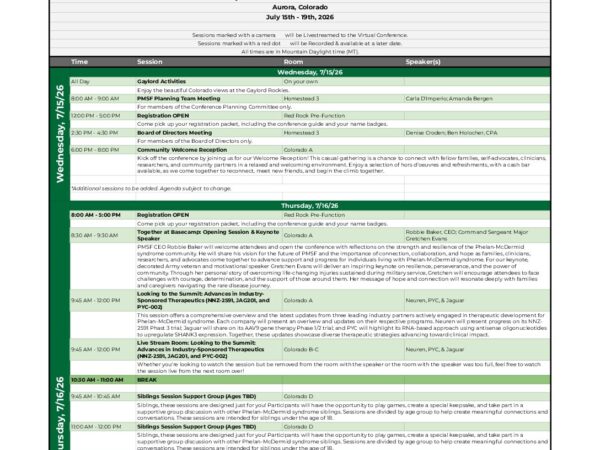
2026 PMSF Family Conference Agenda
The 2026 Family Conference sessions and activities are organized into three tracks that reflect the Foundation’s mission: CONNECT, CARE, and CURE, and align with this year’s theme, The Climb We Make Together.


The 2026 Family Conference sessions and activities are organized into three tracks that reflect the Foundation’s mission: CONNECT, CARE, and CURE, and align with this year’s theme, The Climb We Make Together.
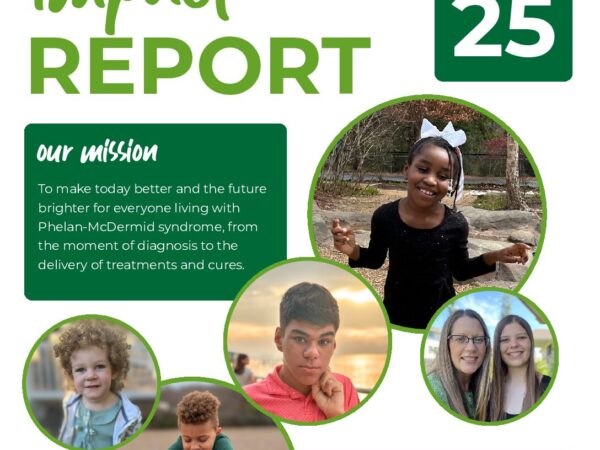
In 2025, families found connection, care expanded, and research accelerated, bringing treatments and a cure closer than ever.
The Phelan-McDermid Syndrome Foundation’s 2025 Independent Audit Report provides an objective assessment of the organization’s financial statements and internal controls.

The Phelan-McDermid Syndrome Foundation (PMSF) is committed to transparency and responsible stewardship.
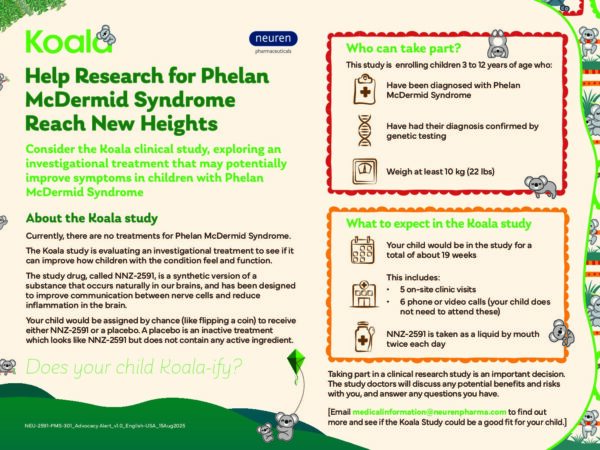
The Phelan-McDermid Syndrome Foundation is sharing an important update with our community: Neuren’s Phase 3 clinical trial of NNZ-2951, known as the “Koala” study, is now active and listed on clinicaltrials.gov.
In July 2026, we are honored to welcome you to The Climb We Make Together, PMSF’s thirteenth biennial Family Conference and the largest gathering of the Phelan-McDermid syndrome community. Over four powerful days on July 15–19, 2026, 700 attendees will come together with leading researchers, clinicians, industry partners, and advocates to learn, collaborate, and drive medical advancements fueling hope for our families.
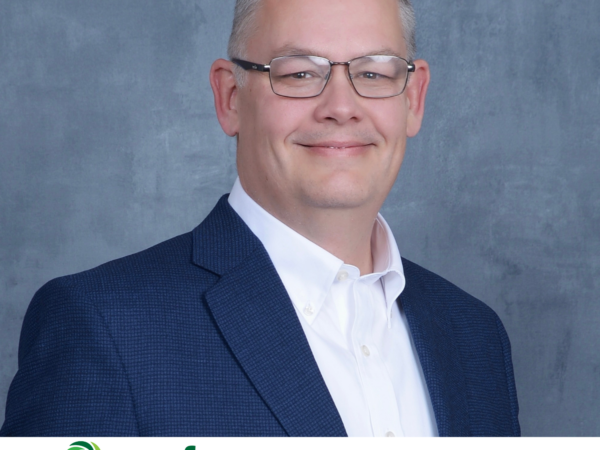
The Phelan McDermid Syndrome Foundation (PMSF) today announced the appointment of Robbie Baker, a seasoned nonprofit executive and successful fundraiser, as its new Chief Executive Officer.

Food isn’t just fuel—it’s nourishment, connection, and care. For individuals with Phelan-McDermid syndrome, the right nutrition can make a meaningful difference in energy,…
From: Alex Kolevzon, MD, PMS MAC chairperson; William Bennett, Jr , MD, MS; Elizabeth Berry-Kravis, MD, PhD; Ann Neumeyer , MD;…
This publication from Dr. Alex Shcheglovitov’s lab outlines how to create lab-grown brain models, called “mini-brains”, with SHANK3 deletions, like those…