

Announcing the Second Phelan-McDermid Syndrome Multidisciplinary Clinic

PMSF is excited to announce the second multidisciplinary Phelan-McDermid syndrome clinic at the Lurie Center for Autism at Massachusetts General Hospital in Boston! Led by Drs. Ann Neumeyer and Ron Thibert, the clinic brings together specialists in neurology, gastroenterology, psychiatry, and genetics to provide coordinated care for both children and adults with Phelan-McDermid syndrome. This is an exciting step forward in PMSF's commitment to expanding access to specialized care through our Clinical Care Network.
Continue ReadingAnnouncing the Second Phelan-McDermid Syndrome Multidisciplinary Clinic

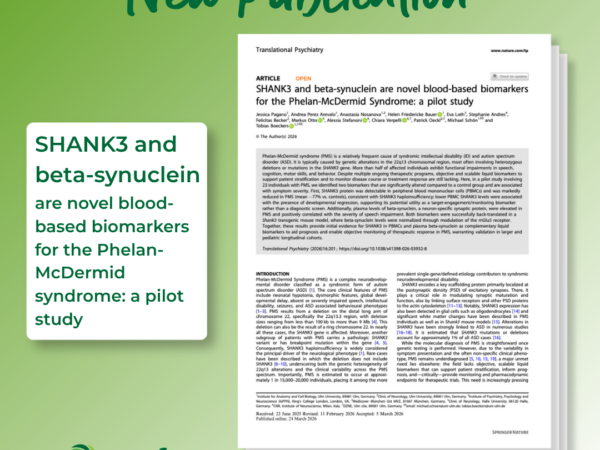
Potential Blood-Based Biomarkers of Phelan-McDermid Syndrome

Researchers at Ulm University in Germany have identified two promising blood-based biomarkers for Phelan-McDermid syndrome, including SHANK3 protein and beta-synuclein. In a pilot study of 23 individuals with Phelan-McDermid syndrome, lower SHANK3 levels and higher beta-synuclein levels were found compared to typically-developing controls. Individuals with Phelan-McDermid syndrome who had a history of regression had lower SHANK3 levels, and those with more significant language impairments had higher beta-synuclein levels. These findings also were observed in a Shank3 mouse model. Together, this suggests SHANK3 and beta-synuclein may be potential blood-based biomarkers in Phelan-McDermid syndrome. Although larger studies are needed to confirm the results, this research marks an important step toward identifying objective biological-based measures that may relate to disease severity and help monitor progression and evaluate treatment effectiveness.

Continue ReadingPotential Blood-Based Biomarkers of Phelan-McDermid Syndrome