
Shop the Official PMSF Store
Looking for Phelan-McDermid Syndrome Foundation apparel? The official PMSF online store makes it easy to show your support, spread awareness, and stay connected to the Phelan-McDermid syndrome community


Information about the Phelan-McDermid Syndrome Foundation (PMSF)
Looking for Phelan-McDermid Syndrome Foundation apparel? The official PMSF online store makes it easy to show your support, spread awareness, and stay connected to the Phelan-McDermid syndrome community

Phelan-McDermid syndrome is a rare genetic condition usually caused by a deletion or structural change at the end of chromosome 22, in a region called 22q13. Symptoms and severity can vary widely among people with Phelan-McDermid syndrome. For individuals with a chromosome 22 deletion, the size of the deletion may help explain some of these clinical differences. In general, larger 22q13 deletions are associated with more significant developmental delays and medical concerns. A recent study in 63 people with Phelan-McDermid syndrome further explored these genotype-phenotype relationships, helping researchers better understand how chromosome 22 deletion size may influence symptoms such as language development, motor function and development, and social behaviors as well as medical issues. This study also identified several candidate genes that could also be contributing to the symptoms seen in Phelan-McDermid syndrome.
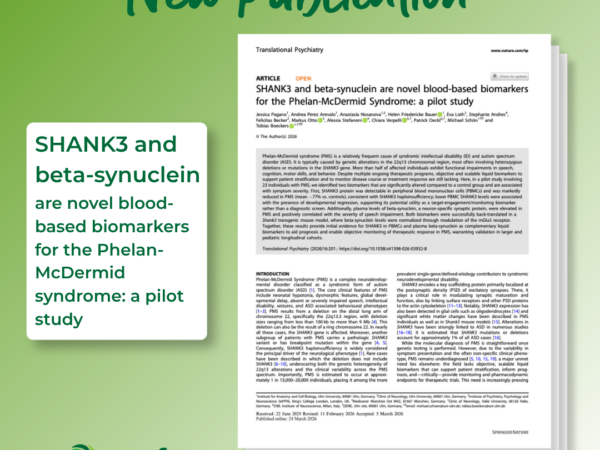
Researchers at Ulm University in Germany have identified two promising blood-based biomarkers for Phelan-McDermid syndrome, including SHANK3 protein and beta-synuclein. In a pilot study of 23 individuals with Phelan-McDermid syndrome, lower SHANK3 levels and higher beta-synuclein levels were found compared to typically-developing controls. Individuals with Phelan-McDermid syndrome who had a history of regression had lower SHANK3 levels, and those with more significant language impairments had higher beta-synuclein levels. These findings also were observed in a Shank3 mouse model. Together, this suggests SHANK3 and beta-synuclein may be potential blood-based biomarkers in Phelan-McDermid syndrome. Although larger studies are needed to confirm the results, this research marks an important step toward identifying objective biological-based measures that may relate to disease severity and help monitor progression and evaluate treatment effectiveness.
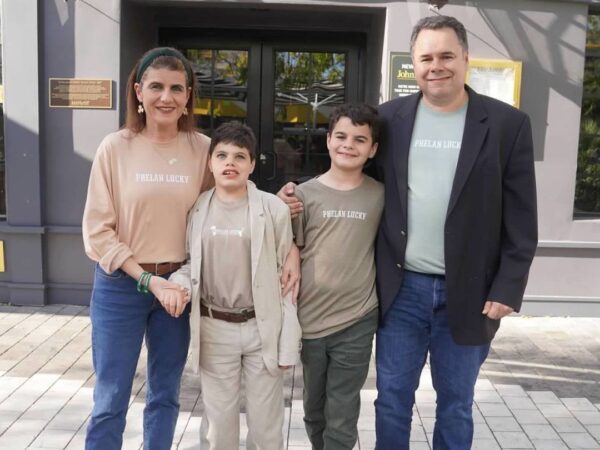
The Castillo family’s 9th Annual #TeamMatthewLuis fundraiser raised more than $21,000 for Phelan-McDermid syndrome research and family support programs.

By: Amanda Bergen & Carla D'ImperioDate: 3/25/26Your go-to resource for local essentials, nearby services, and helpful tips during the conference.Attending the…

By Lauren Schmitt, PhDDate February 25, 2026Everyday, our families are taking their loved ones to clinic appointments, research visits, or under…

Why Nutrition Matters in Phelan-McDermid Syndrome By: Meagan Hutchinson, Science & Research Administrator, Phelan-McDermid Syndrome FoundationDecember 18, 2025Nutrition plays a critical…
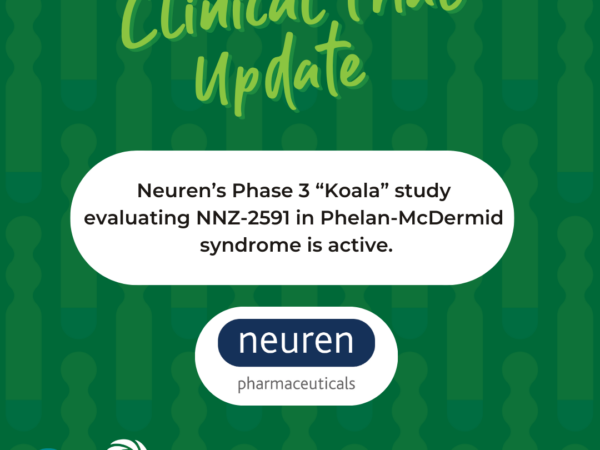
Neuren’s Phase 3 NNZ-2591 Trial for Phelan-McDermid Syndrome is Now Active! by: Lauren Schmitt, PhDDate: December 15, 2025The Phelan-McDermid Syndrome Foundation is…

Updates on the PMS Natural History Study By: Lauren Schmitt, PhD, Chief Science Officer, Phelan-McDermid Syndrome FoundationDecember 11, 2025 What is…

Phelan-McDermid Syndrome Foundation Names Robbie Baker as Chief Executive Officer by: Denise Croden, President, Phelan-McDermid Syndrome FoundationWe are excited to share…